RFP 25-02
RFP 25-02 seeks technology proposals for Demonstration, Verification, and Validation (DV&V) projects.
Submission Window is Closed.
RFP OVERView
The REMADE Institute®, a 150+ member public-private partnership funded in part by the United States Department of Energy, issued its seventh Request for Proposals, representing up to a $6 million investment in supplemental funding for technologies that support the nation’s manufacturing competitiveness and supply chain resilience goals.
The Institute was seeking proposals for demonstration, verification and validation (DV&V) projects that will be expected to demonstrate the technology meets the performance levels required by the supply chain and the economic targets accepted by the market. The proposed technologies must be consistent with REMADE’s multiple energy, material efficiency and lifecycle impact goals. These goals include increasing the reuse, remanufacturing, recovery and recycling (Re-X) of metals, such as aluminum and steel; fibers, including textiles; polymers, including plastics and tires; and electronic scrap.
The REMADE Institute®, a 150+ member public-private partnership funded in part by the United States Department of Energy, issued its seventh Request for Proposals, representing up to a $6 million investment in supplemental funding for technologies that support the nation’s manufacturing competitiveness and supply chain resilience goals.
The Institute is seeking proposals for demonstration, verification and validation (DV&V) projects that will be expected to demonstrate the technology meets the performance levels required by the supply chain and the economic targets accepted by the market. The proposed technologies must be consistent with REMADE’s multiple energy, material efficiency and lifecycle impact goals. These goals include increasing the reuse, remanufacturing, recovery and recycling (Re-X) of metals, such as aluminum and steel; fibers, including textiles; polymers, including plastics and tires; and electronic scrap.
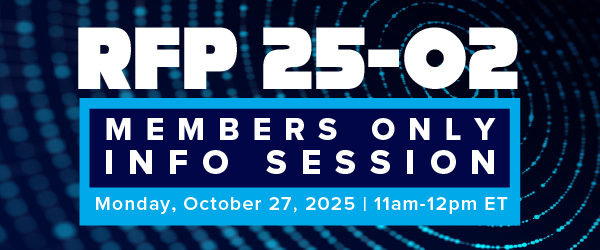
REPLAY AVAILABLE TO Members Only
This replay is available only to REMADE members and is accessible on the Member Dashboard.
Template Downloads
Relevant LInks
Timeline of Important Events
RFP Release Date
Concept paper, SOPO, & Budget Due
Full Submission Deadline
Oral Presentations
Notification of Award
Anticipated Start Date
October 22, 2025
December 10, 2025
January 21, 2026
Late January 2026
February 2026
March-April 2026
ADDITIONAL RFP 25-02 RESOURCES
INFO SESSION-RELATED RESOURCES
Impact Calculator
Project Teaming
CALCULATING PROJECT / PROPOSAL BENEFITS
To help proposers calculate material efficiency and embodied energy benefits for their proposals and projects, REMADE has developed an Excel-based project impact calculator. The Project Impact Calculator is currently in beta testing though it has been revised into a updated version. The use of this tool is not mandatory, and proposals that opt not to use the tool will not be penalized; however, they will still need to calculate the energy, emissions, and material efficiency benefits for their proposal. If proposal teams use embodied energy or emissions data that is different than what was provided in the calculator, please reference the data source and detail any assumptions that went into these calculations to enable validation of these benefits.
To help REMADE refine the capabilities of the calculator and broaden its database of energy and emissions data, REMADE welcomes energy and emissions data that REMADE Members or third parties are willing to provide REMADE for use in the calculator.
Connect & Network With Other Potential Teams!
The RFP Project Teaming Live Sessions were held on March 8 and 9, 2023 at 1:00pm ET. As part of our recently announced Request for Proposals, the REMADE Institute is in a unique position to unite industry innovators, academic researchers and national labs with the goal of facilitating impactful projects that drive the Circular Economy.
IF YOU WISH TO PRESENT AT A FUTURE TEAMING SESSION, PLEASE DOWNLOAD, COMPLETE, & RETURN THE FORM BELOW
Please complete and return the PDF form to us at REMADE_RFP@remadeinstitute.org with the Subject Line: “Teaming Session.” By participating as a presenter, you are agreeing to have your contact information shared with other teaming sessions attendees.
RFP 25-02 Supplemental Application Submission Form
Only teams that previously submitted a concept paper before the Dec 10th deadline are eligible to submit the supplemental application. You may Save & Continue at the bottom of this form to save your responses and complete at a later date. You must select “Submit” to finalize and formally submit your proposal.
Your form entry has been saved and a unique link has been created which you can access to resume this form.
Enter your email address to receive the link via email. Alternatively, you can copy and save the link below.
Please note, this link should not be shared and will expire in 30 days, afterwards your form entry will be deleted.
RFP 25-02 Submission Form
For full details on what to include in your proposal, please refer to the RFP document. You may Save & Continue at the bottom of this form to save your responses and complete at a later date. You must select “Submit” to finalize and formally submit your proposal.
Your form entry has been saved and a unique link has been created which you can access to resume this form.
Enter your email address to receive the link via email. Alternatively, you can copy and save the link below.
Please note, this link should not be shared and will expire in 30 days, afterwards your form entry will be deleted.