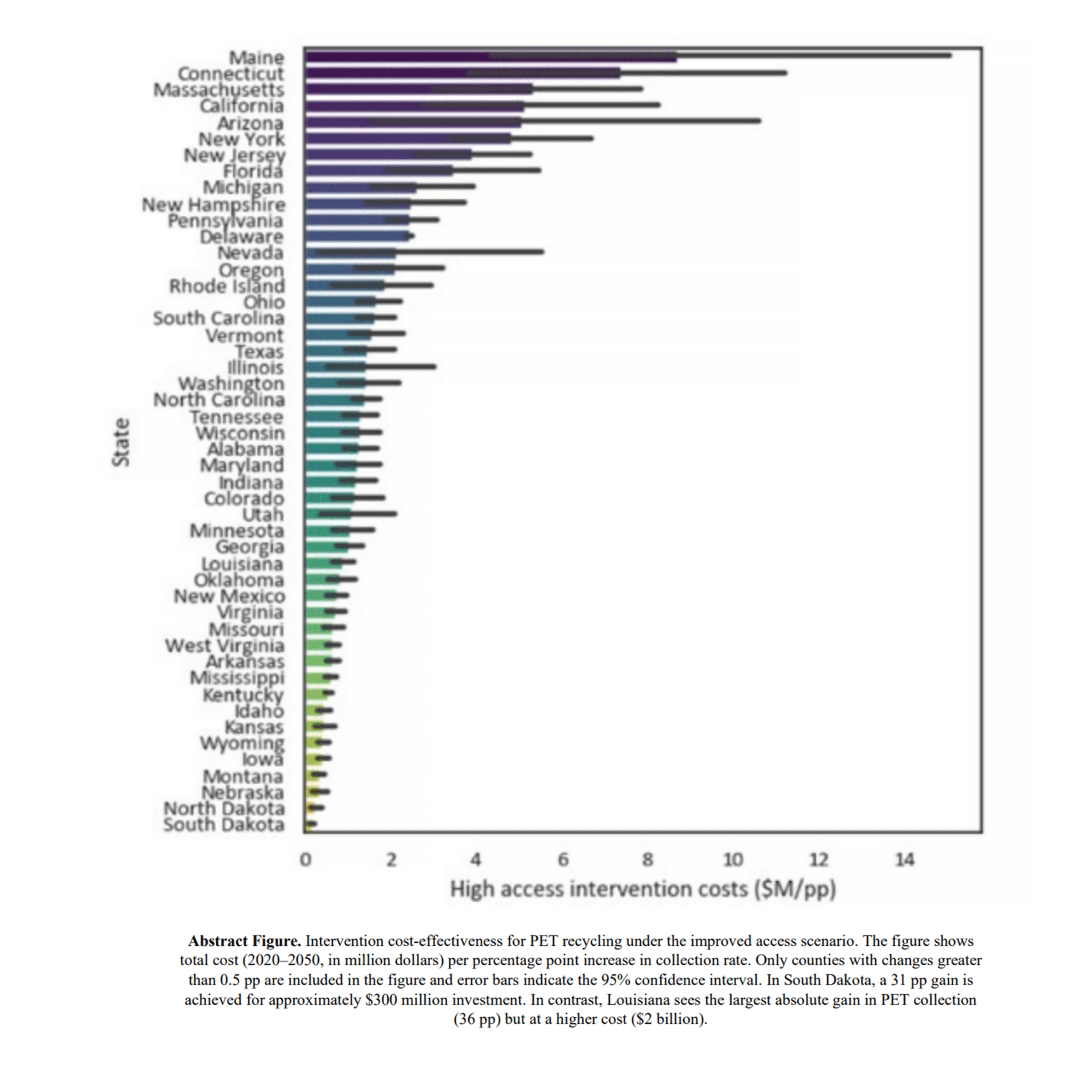
The United States generates 42 Mt of plastic waste significantly contributing to ocean plastic waste. Plastic has become synonymous with the linear economy, and many stakeholders are studying and proposing resource efficient solutions to mitigate plastic pollution. Recycling has received much attention from both social sciences and engineering, but a limited number of studies have quantified how behavioral interventions could asymmetrically affect different populations. This study further develops the plastic parallel pathway platform (4P) – a plastic recycling agent-based model combined with dynamic material flow analysis, and life cycle assessment that can analyze the effect of behavioral interventions on the collection rates of different waste streams. Results for polyethylene terephthalate (PET) and highdensity polyethylene (HDPE) show that an intervention increasing access to recycling programs could improve collection rates by about 20 percentage points (pp) and that the efficacy of the intervention highly depends on the social context. For instance, in South Dakota, a 31 pp gain is achieved for approximately $300 million investment. In contrast, Louisiana sees the largest absolute gain in PET collection (36 pp) but at a higher cost ($2 billion). Increasing access to recycling programs could save about 0.2 million metric tonnes of carbon dioxide (CO2) equivalent per year if the plastic waste is mechanically recycled.