The transition to electric vehicles (EVs) represents a critical leverage point in mitigating climate change, yet the sustainability of these vehicles is intricately linked to their production processes, particularly in the manufacturing of lithium-ion batteries with chemistries like NMC and LFP. This study delves into a systemic analysis of the NMC 811 battery production and material supply chain, emphasizing the global warming potential (GWP) and the opportunities for emissions reduction through domestic manufacturing. Leveraging recent U.S. legislative frameworks, such as the Inflation Reduction Act, the Bipartisan Infrastructure Law, and the CHIPS and Science Act, we examine the potential shifts in NMC 811 battery component manufacturing from a global to a domestic landscape.
Our analysis employs a comprehensive life cycle assessment (LCA) model to quantify environmental impacts, specifically focusing on the global warming potential (GWP) associated with key manufacturing inputs, including resources, heat, electricity, and transport. First, we analyse the GWP impact of the current supply chain for NMC 811 battery production (Fig.1). Next, we simulate a predicted onshoring scenario based on new government funding and calculate the GWP impact for this scenario. Our initial results indicate a 12.4% reduction in GWP for cathode manufacturing per kilogram of NMC 811 battery, excluding transportation impacts. This reduction is primarily due to switching to a less carbon-intensive electricity grid in the United States, which accounts for 93.6% of the reduction following the onshoring of production. Additionally, tracking and assessing upcoming manufacturing sites under the said legislative frameworks suggests that the U.S. could achieve self-sufficiency in battery production to meet domestic demand and evaluate how this enhanced domestic production influences supply chain dynamics.
Our findings delineate the contributions of resources, heat, electricity, and transport to the overall GHG emissions of the battery, which are crucial for advancing sustainable manufacturing practices within the EV industry. Moreover, this study illuminates the broader environmental effects of increasing domestic production, evaluating its role in the global shift towards sustainable energy solutions.
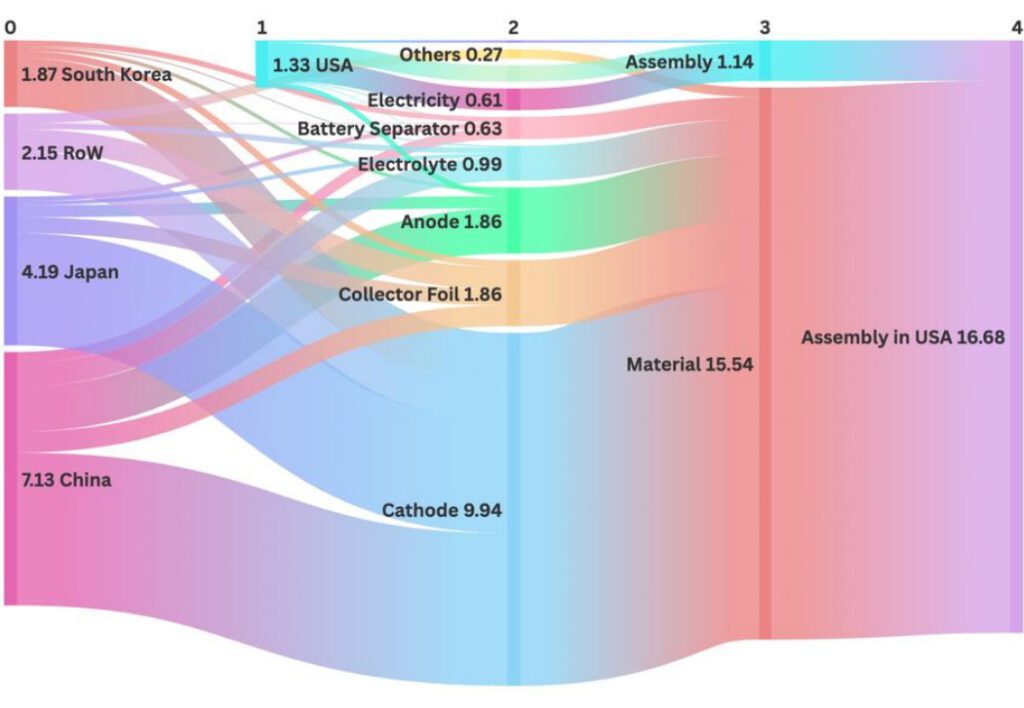
Figure 1. GWP Impact of NMC 811 Battery Cell Production as per Current Supply Chain Scenario (in KgCO2-eq), highlighting that the majority of battery components, such as the cathode, anode, electrolyte, battery separator, etc., are imported to the US from different countries. The supply chain stages are numbered as follows: 0, 1 represents locations, 2 represents components and energy sources, 3 represents materials and energy, and 4 represents the final assembly stage