Single-use plastic films, made of single or multilayer plastic derived from fossil-based polymers, present serious recycling problems [1]. One major challenge in their recycling is that multilayer film laminations are inseparable, leading to poor properties when recovered and remelted. Multilayer packaging thereby contributes to the landfill-waste and exacerbates environmental pollution [2]. The combination of watersoluble and biodegradable polymers is presented in this work as a potential strategy to obtain high barrier performance and trigger degradable properties in multilayer films, eliminating solid-waste problems (Figure 1). Multilayer films composed of melt-extrudable poly (vinyl alcohol) (PVOH) as the core layer and poly (butylene adipate terephthalate) (PBAT) as the outer skin layers for packaging applications were produced by the co-extrusion process. The optimal processing conditions for the multilayer coextruded films (both blown film and cast film) yielding the best combination of properties, performance and potential biodegradability of the flexible plastic films were explored. PBAT/PVOH multilayer films displayed excellent adhesion between the two interlayers in the polymer structure. The interlayer microstructure and chemical composition analysis was performed using SEM morphology, FTIR and NMR characterization methods. The crystallinity of the PVOH grade plays a crucial role in facile processing and ultimately determining the thermal, mechanical and barrier properties of the co-extruded multilayer films. Moreover, these PBAT/PVOH multilayer films exhibited superior barrier properties with an oxygen permeability of 3.5 cc.mil/m2-day at 0% relative humidity (RH), over monolayer PBAT with an oxygen permeability of 15.8 cc.mil/m2-day at 0% RH.
Finally, biodegradation experiments using aqueous dissolution of the PVOH from multilayer films followed by enzyme deconstruction of the remaining film components (mainly PBAT) demonstrated an effective and ecofriendly method for biodegrading and bio-recycling of multilayer plastic films at a large scale. Given all the components are biodegradable, the final polymer films will also biodegrade in compost conditions, thereby creating another sustainable end-of-life option.
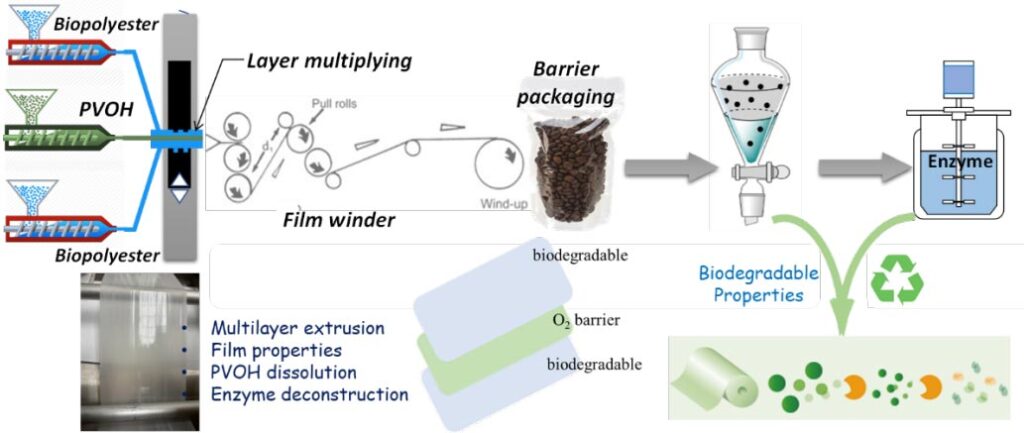
Figure 1. Schematic for fabrication of multilayer packaging films and typical biodegradation process.
References:
1. EPA. Containers and Packaging_ Product-Specific Data _ US EPA. https://www.epa.gov/facts-and-figuresabout-materials-waste-and-recycling/containers-and-packaging-product-specific
2. Supply Chain Solutions Center. Packaging waste 101: the problem. https://supplychain.edf.org/resources/sustainability-101-packaging-waste-the-problem